Development Feedback Loops
An agile trainer once explained the importance of having in-process-checks like automated test suites. The point he was making was about how end of process checks are not good enough. For example, if your QA team finds some defect after you complete the development, then it will result in rework, throwing away some code, etc. Instead, if you have checks embedded in the process, then the feedback is immediate. Agile is mostly about reducing the lengths of feedback loops among various stakeholders.
He explained the point of in process checks/ tests using the example of the Jacquard loom. Till this loom was invented (maybe retrofitted), other looms faced some issues- for example, the threads used to break and that got noticed mostly during manual inspection of the end product fabric- as a result fabric was thrown away or at least of low quality. The Jacquard loom introduced a mechanism where if any of the threads broke, the process will halt immediately and a machine operator will be alerted (not via siren, but by the machine being stopped, I think).
Similarly, automated feedback mechanism during development like running unit tests on developer machine, having integration/ contract tests as a part of build pipeline, etc. are in-process feedbacks versus the end of dev cycle tests. If a test fails you immediately know that something is broken. A subtler point is that if you write test first, then you end bring that test close to in-process feedback rather than writing the same test after you have written the source code.
This reminds me of an old favorite BBC QI discussion. Which Software Drove People To Violence? https://www.youtube.com/watch?v=F7r1GnG9cQ8&ab_channel=QI
So many interesting things get discussed there. Also, it’s just the sort of clip which tells you why Stephen Fry was a great fit as host for the kind of show QI is. He talks about the Jacquard loom, punch cards, Babbage, Ada Lovelace, Sabot, Byron, and with equal quickness of mind about Cynthia being spelt with u in old Greek or how smiling in photographs is a recent thing, etc.
Would you say that sabotage (as in the above video) is also a kind of feedback?
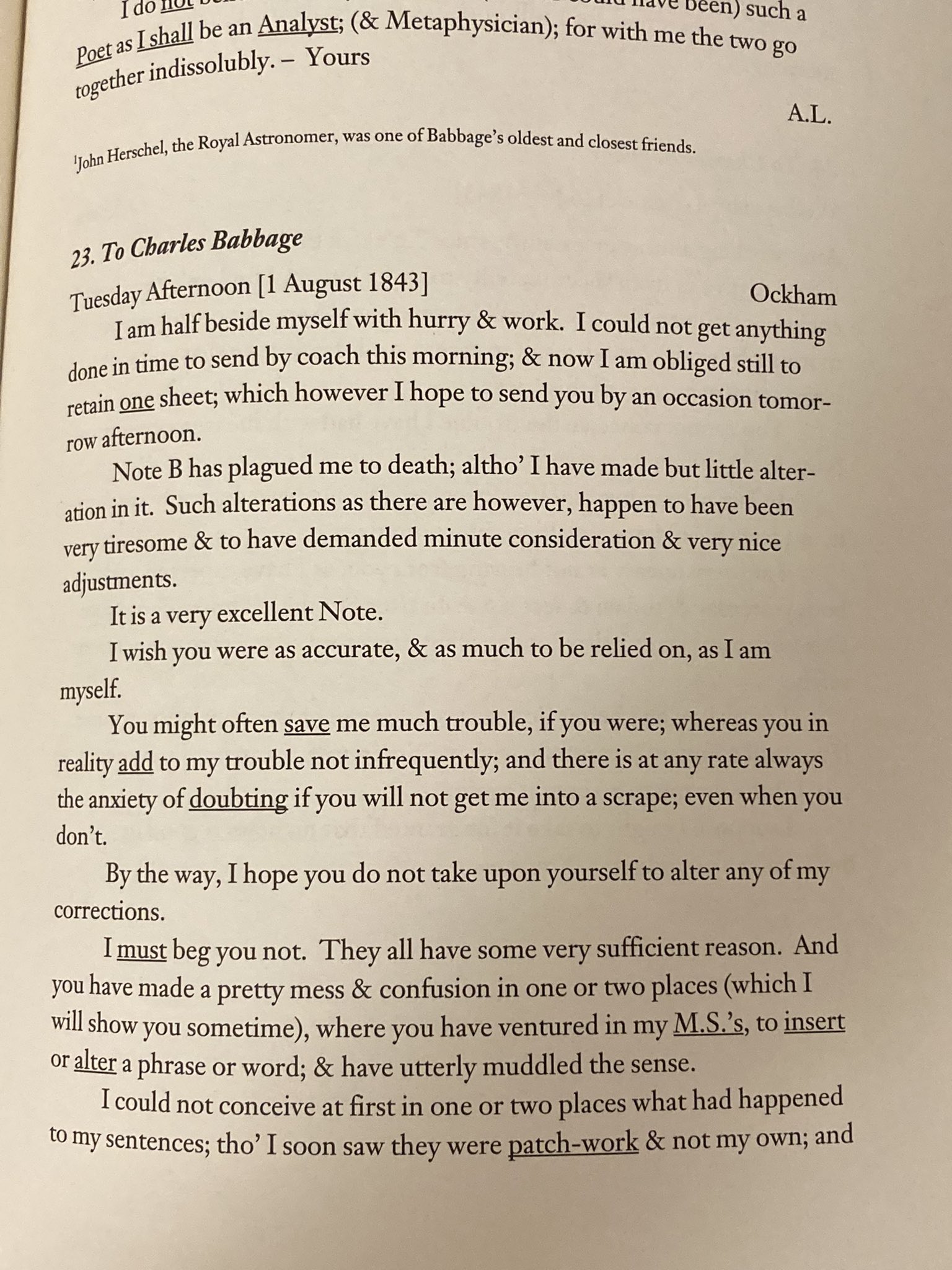
That reminds me of this quite interesting feedback- tweet below. From Ada Lovelace to Charles Babbage. Do read the text in the image. It’s worth it. She might not have been ‘Mad, Bad and Dangerous to Know’ like her father was, but she certainly appears feisty like Scout Finch. The twitter thread mentions the source as Ada, the Enchantress of Numbers by Betty Alexandra Toole.
https://twitter.com/ninabegus/status/1574434557973012480